GHK-CU for sale
Price range: $30.00 through $55.00
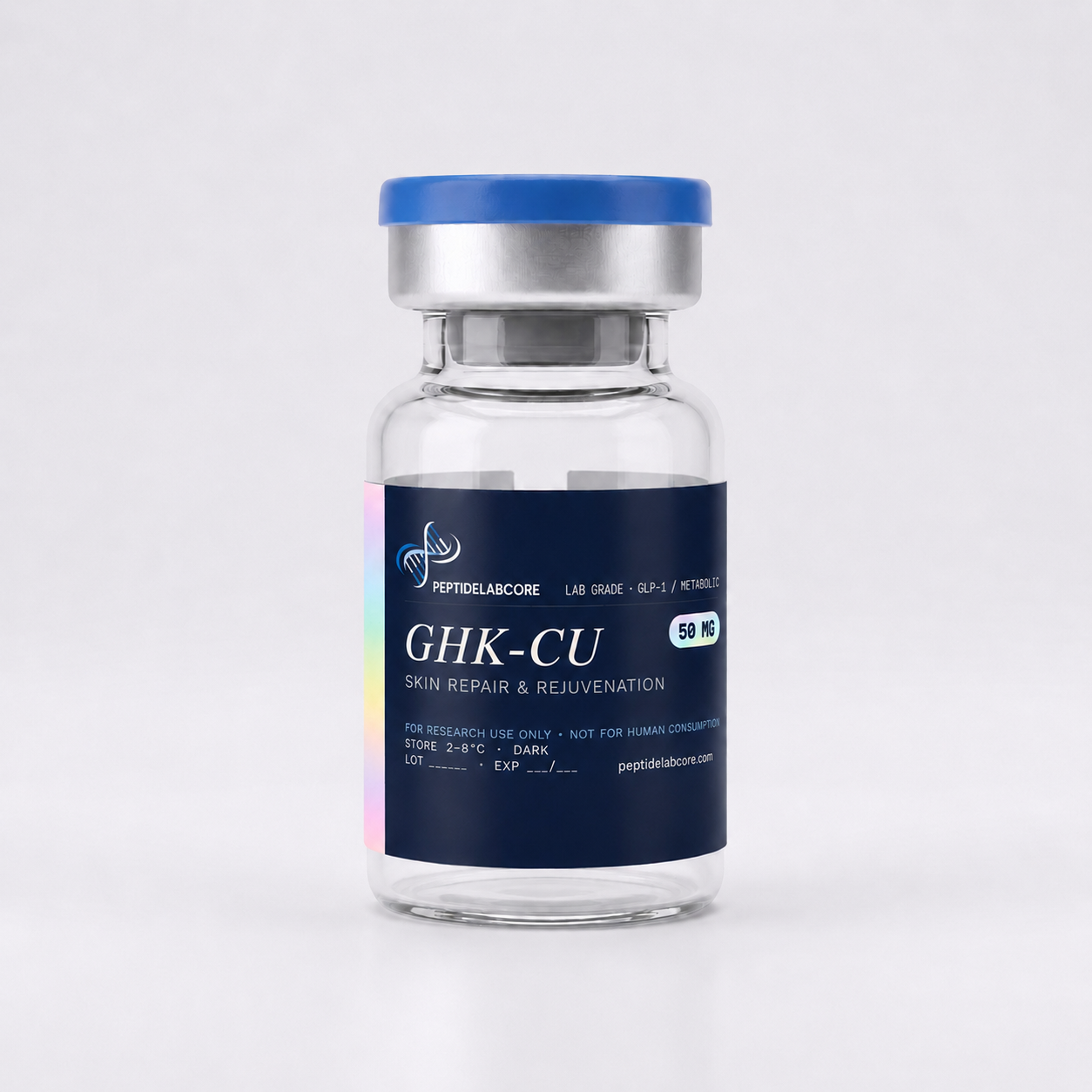
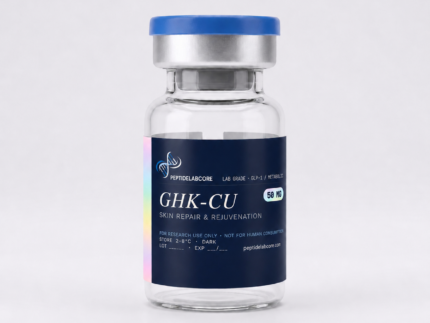
GHK-Cu 50MG (50mg x 10) is a high-purity naturally occurring copper‑binding tripeptide. Supplied as a lyophilized powder in sterile vials, each batch undergoes independent third‑party testing to verify identity and purity (>99%). With a molecular mass of 401.93 and CAS number 49557‑75‑7, this research chemical is intended exclusively for laboratory and in vitro experimentation. For research use only — not for human consumption. GHK-CU for sale
GHK-Cu 50MG Research Peptide — High‑Purity Copper‑Binding Tripeptide for Laboratory Use. GHK-CU for sale
Product Overview
GHK‑Cu is a research‑grade naturally occurring copper‑binding tripeptide. It is supplied as a sterile lyophilized powder in sealed vials. Each package contains ten vials, with each vial holding 50 mg of the research compound. This product is manufactured exclusively for scientific investigation and in vitro laboratory experimentation.
Key Specifications at a Glance:
Quantity: 50 mg per vial, 10 vials per pack
Form: Lyophilized (freeze‑dried) powder
Purity: >99% verified by third‑party testing
Molecular Formula: C₁₄H₂₄CuN₆O₄
Molecular Mass: 401.93 g/mol
CAS Number: 49557‑75‑7
Sequence: Gly‑His‑Lys (glycine‑histidine‑lysine)
PubChem CID: 73587
Synonyms: Copper tripeptide‑1, prezatide copper, GHK copper complex
Research Use Only: Not for human or animal consumption
Understanding GHK‑Cu: The Research Context
GHK‑Cu is a naturally occurring copper‑binding tripeptide composed of three amino acids: glycine, histidine, and lysine. It was first isolated from human plasma in the 1970s and has since become one of the most extensively studied peptides in regenerative research.
Key Research Interests:
Gene expression modulation and regulation
Collagen and elastin synthesis stimulation
Extracellular matrix (ECM) remodeling
Wound healing and tissue repair mechanisms
Antioxidant defense pathway activation
In vitro cell culture investigations
Researchers utilize GHK‑Cu in controlled laboratory settings to study its role in gene regulation, tissue remodeling, and cellular signaling. The peptide is of particular interest to investigators focused on regenerative biology, extracellular matrix dynamics, and the fundamental mechanisms of tissue repair. GHK-CU for sale
The Significance of GHK‑Cu in Human Biology:
GHK‑Cu is naturally present in human plasma at approximately 200 ng/mL in young adults. This level declines significantly with age, falling to around 80 ng/mL by age 60 and to approximately 10 ng/mL by age 80. This age‑related decline parallels reductions in healing capacity and tissue quality, making GHK‑Cu a molecule of significant research interest in aging biology and regenerative medicine.
The Role of Copper:
The copper ion (Cu²⁺) is not merely a passive passenger in this peptide. It is essential for GHK‑Cu’s biological activity. The copper ion acts as a critical cofactor, enabling the peptide to interact with cellular signaling pathways, bind to DNA sequences, and regulate gene expression. Without copper, the tripeptide GHK has significantly different properties. GHK-CU for sale
Third‑Party Testing and Quality Assurance
Every batch of GHK‑Cu undergoes rigorous independent analytical testing to verify identity, purity, and consistency. This third‑party testing ensures that researchers receive a product that meets strict quality specifications before it is approved for release. GHK-CU for sale
The testing process includes:
Identity verification through mass spectrometry
Purity analysis using high‑performance liquid chromatography (HPLC)
Copper content verification to confirm proper chelation
Batch‑to‑batch consistency checks
Residual solvent analysis to confirm complete lyophilization
With a verified purity exceeding 99%, GHK‑Cu meets the high standards required for serious laboratory research applications. Each vial contains only the lyophilized research compound with no unnecessary additives, fillers, or excipients. GHK-CU for sale
Chemical and Physical Properties
Molecular Characteristics
GHK‑Cu is a copper‑binding tripeptide with a distinctive structure. The copper ion is chelated by the peptide, primarily through the histidine residue.
Detailed Molecular Information:
Molecular Formula: C₁₄H₂₄CuN₆O₄
Molecular Mass: 401.93 daltons
CAS Number: 49557‑75‑7
Sequence: Gly‑His‑Lys (glycine‑histidine‑lysine)
PubChem CID: 73587
Copper Content: Approximately 15.8% by mass
Amino Acid Properties:
| Position | Amino Acid | Three‑Letter | One‑Letter | Properties |
|---|---|---|---|---|
| 1 | Glycine | Gly | G | Smallest amino acid; provides flexibility |
| 2 | Histidine | His | H | Contains imidazole ring; primary copper‑binding site |
| 3 | Lysine | Lys | K | Positively charged; contributes to DNA binding |
Structural Features:
Linear tripeptide (3 amino acids)
Copper ion (Cu²⁺) chelated to the peptide
Histidine residue provides primary coordination for copper
Positively charged lysine residue
Pale blue to blue‑green color due to copper content
Coordination Chemistry:
The copper ion is coordinated by the imidazole nitrogen of histidine, the amino terminus nitrogen, and two backbone amide nitrogens. This chelation creates a stable complex that protects the copper ion and enables specific biological interactions. GHK-CU for sale
Physical Form and Storage
The product is supplied as a lyophilized (freeze‑dried) powder within a sterile, sealed vial. The powder typically appears as a pale blue to blue‑green substance due to the copper content.
Recommended Storage Conditions:
Store lyophilized powder at -20°C (-4°F) or below for long‑term preservation
Protect from light exposure
Keep desiccated to prevent moisture absorption
Allow vial to reach room temperature before opening to avoid condensation
Avoid repeated freeze‑thaw cycles once reconstituted
Stability Considerations:
GHK‑Cu is stable when stored properly in lyophilized form. The copper‑peptide bond is stable at neutral pH. Under acidic conditions (below pH 3.5), the copper may dissociate from the peptide. For most laboratory applications using neutral buffers (pH 7.0‑7.4), the complex remains intact.
Once reconstituted with an appropriate sterile solvent, the solution should be used promptly according to laboratory protocols. GHK-CU for sale
Intended Use and Regulatory Status
Research Use Only
GHK‑Cu is classified as a research chemical and is intended exclusively for laboratory and in vitro experimentation. This designation means the product is sold strictly for:
In vitro testing — experiments conducted in controlled laboratory environments
Cell culture studies — investigating gene expression and cellular signaling
Gene expression research — studying modulation of approximately 31% of human genes
Extracellular matrix studies — collagen and elastin synthesis research
Copper‑delivery studies — analyzing metal ion transport in culture
Analytical research — chemical analysis and characterization studies
Scientific investigation — basic research into peptide structure and function
Important Regulatory Notice
This product is not a drug, food, cosmetic, or medical device. Bodily introduction of any kind into humans or animals is strictly forbidden by law. The product should only be handled by licensed, qualified professionals working in appropriate laboratory facilities.
The supplier is a chemical supplier, not a compounding pharmacy or outsourcing facility under Sections 503A or 503B of the Federal Food, Drug, and Cosmetic Act. All product information provided is for educational and research purposes only and does not constitute medical advice or clinical recommendations. GHK-CU for sale
Handling and Safety Guidelines
Professional Handling Required
GHK‑Cu should only be handled by trained laboratory personnel wearing appropriate personal protective equipment (PPE), including:
Laboratory coat
Nitrile gloves
Safety goggles or face shield
Appropriate respiratory protection if aerosolization is possible
- GHK-CU for sale
Reconstitution Protocol
For laboratory use, the lyophilized powder should be reconstituted with a sterile, compatible solvent. Standard practice includes:
Allow the sealed vial to reach room temperature — approximately 15‑30 minutes
Clean the rubber stopper with an alcohol swab
Add the calculated volume of solvent to achieve desired concentration
Gently swirl or roll the vial between palms — do not shake vigorously to avoid foaming
Allow complete dissolution before use — this typically takes 2‑5 minutes
Reconstitution Example for GHK‑Cu 50MG:
For researchers needing a 50 mg/mL working solution, add 1 mL of sterile solvent to the 50 mg vial. For a 25 mg/mL solution, add 2 mL of solvent. For a 10 mg/mL solution, add 5 mL of solvent. Always verify calculations before proceeding with experiments. GHK-CU for sale
Solvent Considerations:
GHK‑Cu is water‑soluble. Researchers should determine the appropriate solvent based on their specific experimental protocol. Common options include sterile water for injection, bacteriostatic water, or buffered solutions such as phosphate‑buffered saline (PBS) at neutral pH (7.0‑7.4). Avoid acidic solvents (below pH 3.5) which may cause copper dissociation. GHK-CU for sale
Disposal Considerations
Dispose of GHK‑Cu and any contaminated materials in accordance with federal, state, and local regulations for chemical waste disposal. Do not dispose of in regular trash or down drains unless permitted by local guidelines. GHK-CU for sale
Research Applications
GHK‑Cu is used in various laboratory research contexts, spanning genomics, cell biology, and tissue engineering. Typical applications include:
Gene Expression Studies:
GHK‑Cu is a well‑documented modulator of gene expression. Research has demonstrated that GHK‑Cu affects approximately 31% of human genes with ≥50% expression changes. This broad regulatory role makes GHK‑Cu valuable for studying:
Gene expression patterns in response to peptide treatment
Transcriptional regulation mechanisms
Upregulation of beneficial genes (collagen, elastin, antioxidants)
Downregulation of inflammatory genes
Collagen and Elastin Synthesis Research:
GHK‑Cu is known to stimulate the production of extracellular matrix components. Researchers use GHK‑Cu to study:
Collagen type I synthesis and organization
Elastin production and assembly
Extracellular matrix remodeling dynamics
Fibroblast activation and function
Wound Healing and Tissue Repair Studies:
GHK‑Cu has been extensively studied in tissue repair models. Research applications include:
Wound healing kinetics and mechanisms
Angiogenesis and blood vessel formation
Granulation tissue formation
Re‑epithelialization processes
Antioxidant and Anti‑Inflammatory Research:
GHK‑Cu modulates oxidative stress and inflammatory pathways. Researchers use GHK‑Cu to investigate:
Antioxidant enzyme expression (SOD, catalase, glutathione peroxidase)
Reactive oxygen species (ROS) regulation
Pro‑inflammatory cytokine modulation
- GHK-CU for sale
NF‑κB pathway interactions
Fibroblast and Keratinocyte Cell Culture Studies:
GHK‑Cu is used in controlled cell culture systems to study:
Fibroblast proliferation and migration
Keratinocyte differentiation and function
Cellular responses to copper‑peptide signaling
Extracellular matrix production
- GHK-CU for sale
Copper‑Dependent Enzyme Interaction Assays:
Researchers use GHK‑Cu to study copper‑dependent enzyme activity and metallopeptide chemistry, including:
Lysyl oxidase interactions
Matrix metalloproteinase (MMP) modulation
Copper transport and delivery in culture
Aging Biology Research:
Given the age‑related decline in plasma GHK‑Cu levels, researchers use GHK‑Cu to study:
Age‑related changes in tissue repair capacity
Cellular senescence markers
Extracellular matrix degradation in aging models
Regenerative decline mechanisms
- GHK-CU for sale
Researchers should design their experimental protocols based on peer‑reviewed literature and established laboratory practices specific to copper‑binding peptides. GHK-CU for sale
What Makes This Product Different
Naturally Occurring Human Peptide
Unlike many synthetic research peptides, GHK‑Cu is a naturally occurring peptide found in human plasma. This natural origin provides a relevant biological context for research into its mechanisms and functions.
Broad Gene Expression Modulation
GHK‑Cu affects approximately 31% of human genes with ≥50% expression changes, making it one of the most broadly active regulatory peptides identified. This broad activity distinguishes GHK‑Cu from peptides with narrow, receptor‑specific actions.
Copper‑Dependent Activity
The copper ion is essential for GHK‑Cu’s biological activity. Unlike peptides that function solely through their amino acid sequence, GHK‑Cu requires proper copper chelation for gene regulatory and signaling functions. GHK-CU for sale
Age‑Related Decline Significance
Plasma GHK‑Cu levels decline significantly with age, from approximately 200 ng/mL in young adults to about 10 ng/mL by age 80. This age‑related decline makes GHK‑Cu a molecule of significant interest in aging biology research.
Optimal 50MG Research Quantity
The 50 mg vial size provides researchers with a quantity suitable for multiple experiments, including gene expression arrays, cell culture studies, and dose‑response investigations requiring higher concentrations. GHK-CU for sale
Rigorous Quality Control
Unlike research chemicals sold without verification, GHK‑Cu comes with documented third‑party testing for every batch. This commitment to quality assurance gives researchers confidence in the consistency and reliability of their experimental results.
Distinctive Physical Appearance
The pale blue to blue‑green color of GHK‑Cu is a distinctive visual indicator of proper copper chelation, providing researchers with immediate visual confirmation of product integrity. GHK-CU for sale
Batch Traceability
Each package of GHK‑Cu includes batch identification numbers that allow researchers to trace their material back to original manufacturing and testing records. This traceability is essential for reproducible research and quality documentation. GHK-CU for sale
Frequently Asked Questions for Researchers
What is the purity level of GHK‑Cu?
Each batch is tested to verify purity exceeding 99% via HPLC and mass spectrometry. Individual certificates of analysis are available upon request. GHK-CU for sale
What is the difference between GHK‑Cu 50MG and 100MG?
The only difference is the quantity per vial. GHK‑Cu 50MG contains 50 mg per vial, while GHK‑Cu 100MG contains 100 mg per vial. Both share identical chemical properties, purity standards (>99%), and quality assurance protocols. GHK-CU for sale
Which vial size should I choose for my research?
Choose 50 MG for moderate‑scale studies, preliminary investigations, or when precise handling of smaller quantities is preferred. Choose 100 MG for larger‑scale experiments, extended time‑course studies, or protocols requiring higher peptide concentrations.
How should the lyophilized powder be stored?
Store at -20°C or below, protected from light and moisture. Avoid repeated freeze‑thaw cycles once reconstituted. GHK-CU for sale
What solvent should be used for reconstitution?
GHK‑Cu is water‑soluble. Researchers should determine the appropriate solvent based on their specific experimental protocol. Common options include sterile water for injection, bacteriostatic water, or buffered solutions such as PBS at neutral pH (7.0‑7.4).
Is this product sterile?
The lyophilized powder is manufactured under aseptic conditions, but researchers should follow standard laboratory practices for handling research chemicals. For cell culture applications, additional filtration using a 0.22‑micron filter may be appropriate.
What is the significance of the CAS number 49557‑75‑7?
The CAS number is a unique identifier for GHK‑Cu (Copper Tripeptide‑1), allowing researchers to verify they are working with the correct chemical compound when ordering or referencing the peptide in publications. GHK-CU for sale
What is the amino acid sequence of GHK‑Cu?
The sequence is glycine‑histidine‑lysine, abbreviated as GHK or Gly‑His‑Lys.
Why does GHK‑Cu appear blue?
The pale blue to blue‑green color is characteristic of copper complexes. The copper ion (Cu²⁺) in GHK‑Cu absorbs light in the red‑orange region, resulting in the complementary blue color visible to researchers. GHK-CU for sale
What research applications is GHK‑Cu used for?
GHK‑Cu is studied in gene expression modulation, extracellular matrix remodeling, wound healing, angiogenesis, antioxidant pathways, and aging biology in laboratory cell culture and research models.
Can GHK‑Cu be used in combination with other research peptides?
Researchers should determine compatibility based on their specific experimental design. GHK‑Cu is frequently studied in combination with BPC‑157 and TB‑500 in multi‑peptide formulations. Standard laboratory practice includes testing interactions in control experiments before full‑scale implementation.
Final Notes for Laboratory Researchers
GHK‑Cu 50MG represents a high‑purity research tool for qualified professionals conducting legitimate scientific investigations into gene expression modulation, extracellular matrix remodeling, tissue repair mechanisms, aging biology, and related regenerative fields. With documented third‑party testing, complete chemical specifications, and appropriate packaging for laboratory use, this product meets the standards expected by serious researchers.
The 50 mg vial size is optimized for moderate‑scale research applications requiring precise handling for gene expression arrays, cell culture studies, and dose‑response investigations. As a naturally occurring human peptide with broad gene regulatory activity, GHK‑Cu offers unique research opportunities in regenerative biology and aging research.
For research use only. Not for human or animal consumption. Handle only in appropriate laboratory facilities with proper safety equipment and training.
Related products
GHK-Cu 50 MG
In Stock · Ready to Ship
Free Worldwide Shipping