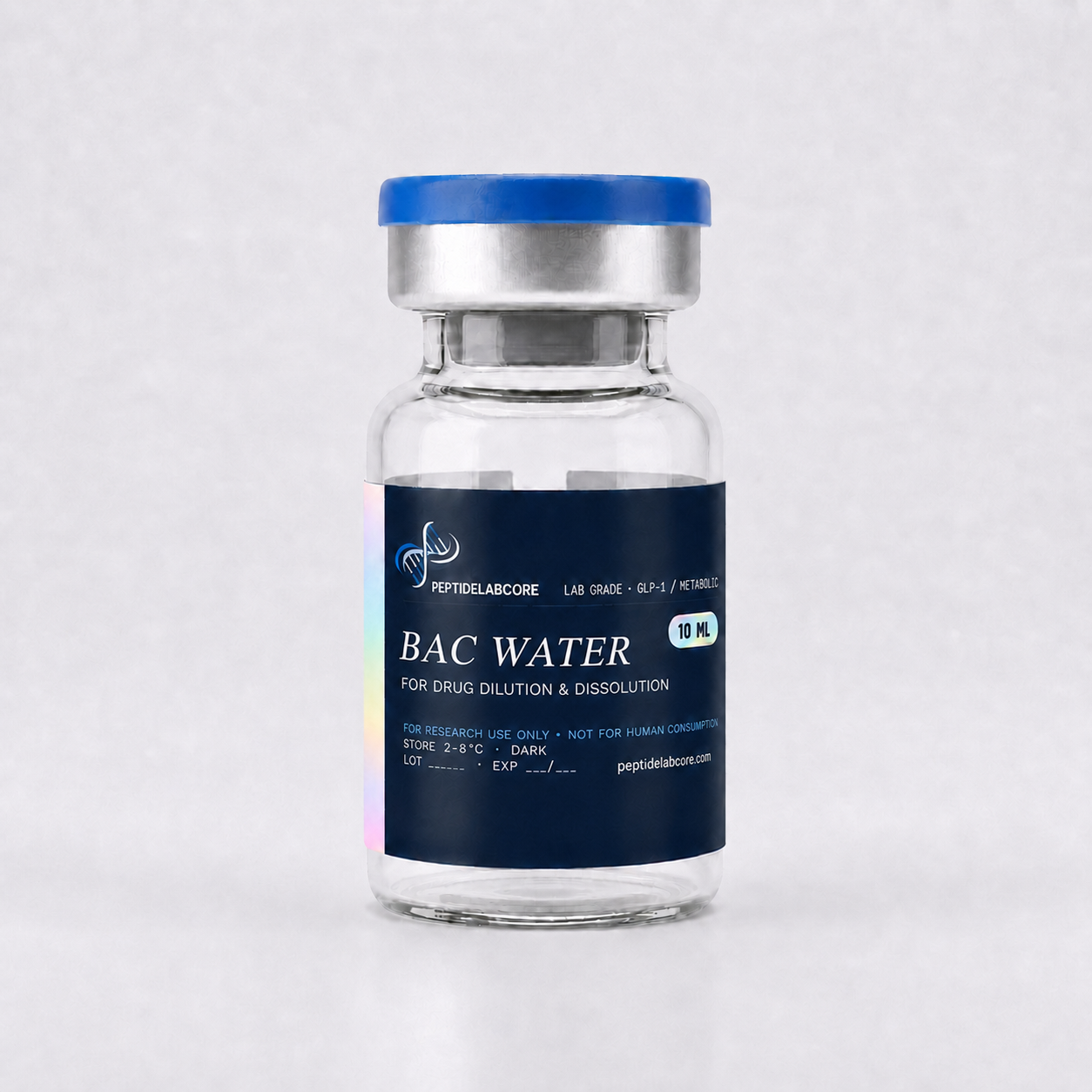
BAC water
$8.99
BAC Water 30mL (10 vials) is sterile, non-pyrogenic bacteriostatic water containing 0.9% benzyl alcohol as a preservative. Supplied in multi-dose vials, each batch is manufactured under GMP-certified conditions with 0.22µm filtration. Ideal for research peptide reconstitution and laboratory applications. For research use only — not for human or animal injection.
BAC Water 30mL — Sterile Bacteriostatic Water for Research Peptide Reconstitution
Product Overview
BAC Water (Bacteriostatic Water) is a sterile, non-pyrogenic water solution containing 0.9% benzyl alcohol as a bacteriostatic preservative. It is supplied in multi-dose vials designed for repeated withdrawals in laboratory research settings. Each package contains ten vials, with each vial holding 30mL of sterile bacteriostatic water. This product is manufactured exclusively for research use and in vitro laboratory applications .
Key Specifications at a Glance:
Quantity: 30mL per vial, 10 vials per pack
Form: Ready-to-use sterile liquid
Preservative: 0.9% Benzyl Alcohol (9mg/mL)
Sterilization: 0.22µm filtration, aseptically filled
pH Range: 4.5–7.0
In-Use Period: Up to 28 days after first puncture (with aseptic handling)
Storage: 20–25°C (Controlled Room Temperature)
Research Use Only: Not for human or animal injection
Understanding BAC Water: The Research Context
BAC Water is a specialized sterile water solution designed for multiple withdrawals in laboratory research settings. Unlike standard sterile water (which is intended for single use), BAC Water contains 0.9% benzyl alcohol as a bacteriostatic preservative that inhibits bacterial growth, allowing the vial to be used repeatedly over a period of up to 28 days when proper aseptic technique is followed .
Key Research Applications:
Peptide reconstitution and dilution
Protein and antibody preparation
Working solution preparation from lyophilized materials
Laboratory reagent dissolution
Cell culture media preparation
Researchers utilize BAC Water in controlled laboratory settings to reconstitute lyophilized (freeze-dried) research compounds, including peptides, proteins, and antibodies. The bacteriostatic preservative maintains sterility during repeated use, making it particularly valuable for research protocols requiring multiple samplings from the same vial .
The Role of Benzyl Alcohol:
The 0.9% benzyl alcohol concentration serves as a bacteriostatic agent, preventing the growth of contaminating bacteria in the solution after the vial has been opened. This allows for repeated withdrawals without compromising sterility, provided aseptic technique is maintained. The concentration of 0.9% (9 mg/mL) is well-established in pharmaceutical and research applications .
BAC Water vs. Sterile Water: Understanding the Difference
Researchers often ask about the distinction between BAC Water and standard sterile water. Understanding this difference is important for proper experimental design.
| Feature | BAC Water (Bacteriostatic) | Sterile Water (Preservative-Free) |
|---|---|---|
| Container Type | Multi-dose vial | Single-dose vial |
| Preservative | 0.9% Benzyl Alcohol | None |
| In-Use Period | Up to 28 days after first puncture | Single use only; discard immediately |
| Best For | Multiple samplings, peptide reconstitution protocols | Single-use applications |
| Cost Efficiency | More economical for repeated use | Higher cost per use for multiple applications |
Choosing the Right Water for Your Research:
BAC Water — Ideal for peptide reconstitution when multiple samplings from the same vial are required over days or weeks. The bacteriostatic preservative maintains sterility for up to 28 days .
Sterile Water (Preservative-Free) — Appropriate for single-use applications where the entire contents are used immediately and no preservative is desired.
Quality Assurance and Manufacturing Standards
Every batch of BAC Water is manufactured under strict quality control standards to ensure sterility, consistency, and reliability for research applications.
Manufacturing Process:
Sterilization: Purified using a 0.22 µm filtration process
Filling: Aseptically filled into sterile vials
Quality Standards: Manufactured in GMP-certified facilities under ISO standards
Testing: Each batch undergoes sterility and endotoxin testing
Quality Specifications:
| Parameter | Specification |
|---|---|
| Sterility | Sterile, non-pyrogenic |
| pH | 4.5–7.0 |
| Preservative | 0.9% Benzyl Alcohol (9 mg/mL) |
| Container | Multi-dose vial with bromobutyl rubber closure |
| Shelf Life | 24 months unopened |
Physical Properties and Storage
Chemical Composition
| Component | Concentration | Purpose |
|---|---|---|
| Water for Injection (WFI) | 99.1% | Solvent/base |
| Benzyl Alcohol | 0.9% (9 mg/mL) | Bacteriostatic preservative |
Storage Conditions
Recommended Storage:
Store at 20–25°C (68–77°F) — Controlled Room Temperature
Protect from light exposure
Do not freeze
Keep vial sealed when not in use
After Opening:
Use within 28 days of first puncture
Refrigeration after opening is recommended by some manufacturers
Always use aseptic technique when withdrawing solution
Discard immediately if solution appears discolored or contains particles
Intended Use and Regulatory Status
Research Use Only
BAC Water is classified as a research chemical and is intended exclusively for laboratory and in vitro experimentation. This designation means the product is sold strictly for:
Peptide reconstitution — dissolving lyophilized research peptides
Protein preparation — diluting proteins for laboratory assays
Working solution preparation — creating stock solutions from lyophilized materials
Cell culture applications — as a solvent for certain research reagents
Analytical research — chemical analysis and characterization studies
Important Regulatory Notice
This product is not a drug, food, cosmetic, or medical device. Bodily introduction of any kind into humans or animals is strictly forbidden by law. The product should only be handled by licensed, qualified professionals working in appropriate laboratory facilities .
The supplier is a chemical supplier, not a compounding pharmacy or outsourcing facility under Sections 503A or 503B of the Federal Food, Drug, and Cosmetic Act. All product information provided is for educational purposes only and does not constitute medical advice or clinical recommendations.
Handling and Safety Guidelines
Professional Handling Required
BAC Water should only be handled by trained laboratory personnel wearing appropriate personal protective equipment (PPE), including:
Laboratory coat
Nitrile gloves
Safety goggles or face shield
Aseptic Technique Protocol
To maintain sterility and maximize the 28-day in-use period:
Before first use: Inspect vial for damage or turbidity. Discard if solution is discolored or contains particles .
Clean the stopper: Wipe the rubber stopper with a sterile alcohol swab before each puncture.
Use sterile needles/syringes: Always use sterile, single-use needles and syringes.
Minimize punctures: Avoid unnecessary punctures to reduce contamination risk.
Proper withdrawal: Insert needle through the center of the stopper. Do not touch the needle to any non-sterile surface.
Label with date: Write the date of first puncture on the vial label.
Discard after 28 days: Do not use beyond 28 days after first puncture, even if solution remains .
Peptide Reconstitution Protocol
When reconstituting lyophilized research peptides with BAC Water:
Allow the sealed BAC Water vial to reach room temperature.
Clean the rubber stopper with an alcohol swab.
Using a sterile syringe, withdraw the calculated volume of BAC Water needed for your peptide concentration.
Inject the BAC Water slowly down the inner wall of the peptide vial to avoid foaming.
Gently swirl the vial — do not shake vigorously.
Allow complete dissolution before use.
Important Considerations:
Consult the peptide manufacturer’s datasheet for recommended reconstitution volume
Some peptides may be incompatible with benzyl alcohol; verify compatibility before use
For peptides sensitive to benzyl alcohol, preservative-free sterile water may be more appropriate
Disposal Considerations
Dispose of BAC Water and any contaminated materials in accordance with federal, state, and local regulations for chemical waste disposal. Do not dispose of in regular trash or down drains unless permitted by local guidelines.
Research Applications
BAC Water is used in various laboratory research contexts, primarily for reconstituting lyophilized research compounds. Typical applications include:
Peptide Reconstitution:
The primary research application for BAC Water is dissolving lyophilized (freeze-dried) research peptides. The 0.9% benzyl alcohol concentration maintains sterility during repeated use, making it ideal for research protocols requiring multiple samplings over days or weeks .
Protein and Antibody Preparation:
BAC Water is used to prepare working solutions from lyophilized proteins and antibodies in laboratory research settings. The preservative maintains sterility during extended use protocols .
Working Solution Preparation:
Researchers use BAC Water to create stock solutions from lyophilized materials for various laboratory applications, including:
Assay development
Cell culture supplementation
Analytical standards preparation
Laboratory Reagent Dissolution:
BAC Water serves as an aqueous vehicle for dissolving research reagents that require dilution or must be dissolved prior to use in laboratory experiments .
Cell Culture Media Preparation:
In some research applications, BAC Water may be used as a component in preparing cell culture media or buffers, though compatibility should always be verified.
Researchers should design their experimental protocols based on peer-reviewed literature and established laboratory practices specific to their research applications.
What Makes This Product Different
Bacteriostatic Preservation for Multi-Use
Unlike standard sterile water that must be discarded after a single use, BAC Water contains 0.9% benzyl alcohol that inhibits bacterial growth for up to 28 days after first puncture. This allows researchers to use a single vial multiple times, reducing waste and improving laboratory efficiency .
Optimal pH Range for Peptide Compatibility
With a pH range of 4.5–7.0, BAC Water is compatible with a wide range of research peptides and proteins . This broad pH compatibility makes it suitable for reconstituting various research compounds.
GMP-Certified Manufacturing
BAC Water is manufactured in GMP-certified facilities under ISO standards, ensuring consistent quality and sterility for research applications .
Multi-Dose Vial Design
The 30mL multi-dose vial is specifically designed for repeated withdrawals in laboratory settings. The bromobutyl rubber closure provides a secure seal that maintains sterility when proper aseptic technique is used .
0.22µm Sterile Filtration
Each batch undergoes 0.22µm filtration and is aseptically filled, ensuring sterility and non-pyrogenicity for sensitive research applications .
28-Day In-Use Period
When proper aseptic technique is followed, each vial maintains sterility for up to 28 days after first puncture, providing flexibility for extended research protocols .
Frequently Asked Questions for Researchers
What is the benzyl alcohol concentration in BAC Water?
BAC Water contains 0.9% benzyl alcohol (9 mg/mL) as a bacteriostatic preservative .
How long can I use a vial after first puncture?
With proper aseptic handling, BAC Water can be used for up to 28 days after the first puncture. After this period, the vial should be discarded .
How should BAC Water be stored?
Store at 20–25°C (Controlled Room Temperature), protect from light, and do not freeze. After opening, refrigeration is recommended by some manufacturers .
What is the pH range of BAC Water?
The pH typically falls between 4.5 and 7.0 .
Is BAC Water suitable for all peptide reconstitution?
BAC Water is widely used for peptide reconstitution in research workflows. However, researchers should verify compatibility with their specific peptide, as some peptides may be sensitive to benzyl alcohol .
What is the difference between BAC Water and sterile water?
BAC Water contains 0.9% benzyl alcohol as a preservative and is supplied in multi-dose vials for repeated use (up to 28 days). Sterile water contains no preservative and is supplied in single-dose vials that must be discarded after one use .
Can BAC Water be used for cell culture applications?
Researchers should determine compatibility based on their specific experimental protocol. The benzyl alcohol preservative may affect certain cell culture systems.
What should I do if the solution appears discolored or contains particles?
Discard the vial immediately if the solution appears discolored or contains particles. Do not use .
Is BAC Water sterile?
Yes, BAC Water is sterile and non-pyrogenic, manufactured using 0.22µm filtration and aseptic filling processes .
What is the shelf life of unopened BAC Water?
Unopened BAC Water has a shelf life of approximately 24 months when stored properly at controlled room temperature .
Final Notes for Laboratory Researchers
BAC Water (30mL) represents a high-quality, sterile bacteriostatic water solution for qualified professionals conducting legitimate scientific investigations requiring peptide reconstitution, protein preparation, and other laboratory applications. With documented quality assurance, complete specifications, and appropriate packaging for research use, this product meets the standards expected by serious researchers.
The 30mL multi-dose vial size is optimized for research applications requiring repeated withdrawals over an extended period. The 0.9% benzyl alcohol preservative maintains sterility for up to 28 days when proper aseptic technique is followed, providing flexibility and efficiency for laboratory research protocols.
For research use only. Not for human or animal injection. Handle only in appropriate laboratory facilities with proper safety equipment and training.
Related products
GHK-CU for sale
In Stock · Ready to Ship
Free Worldwide Shipping
NAD+ (500mg, 1000mg) Best
In Stock · Ready to Ship
Free Worldwide Shipping