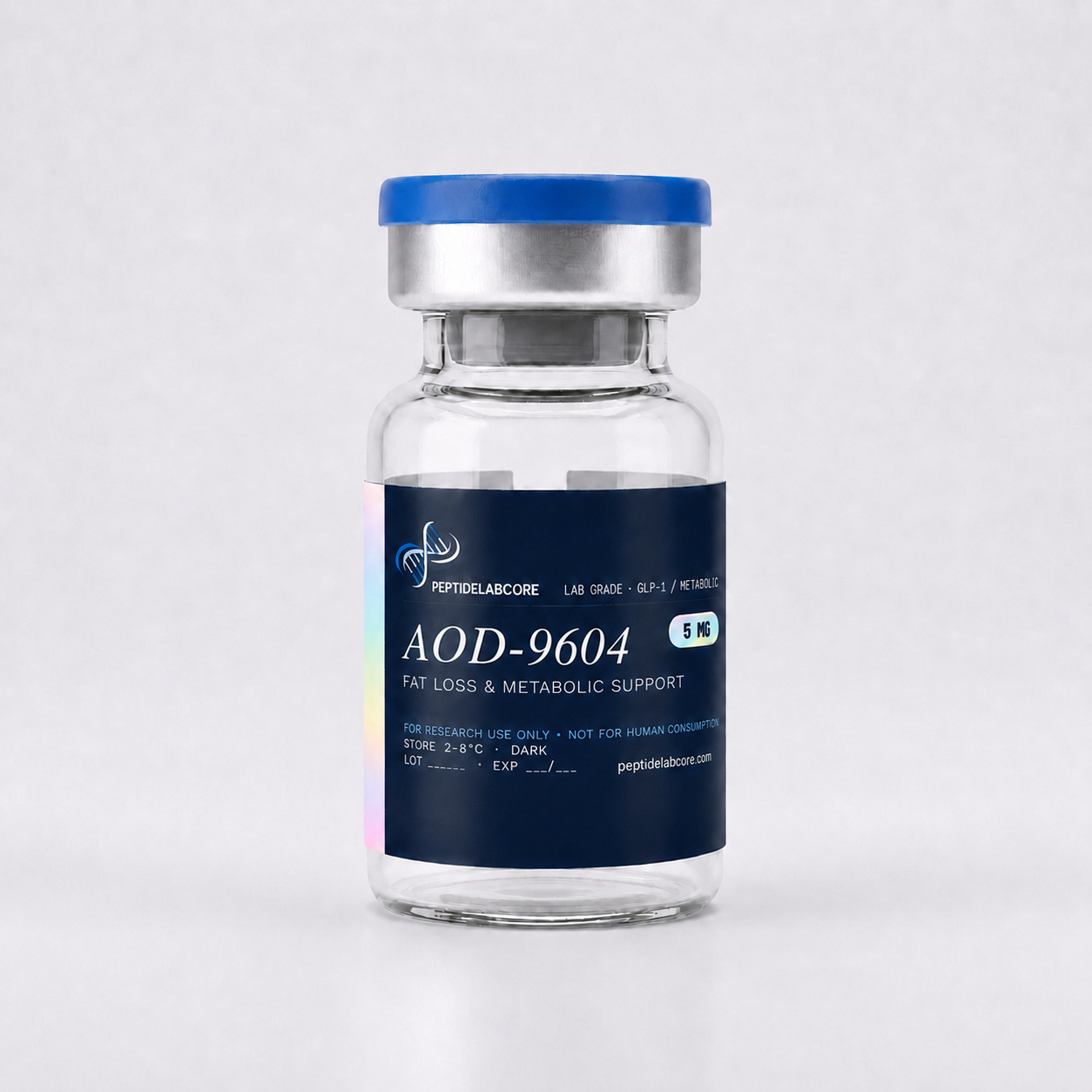
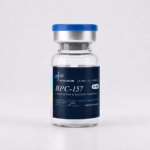
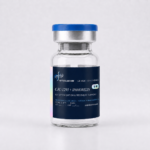
aod9604 peptide for sale
$45.00
NEXT COURIER PICK-UP IN:
02h 34m 59s- ✓
Compound: AOD9604 (hGH Fragment 176-191 analog) - ✓
Form: Lyophilized Powder - ✓
Research Focus: Lipolysis, fat metabolism, adipocyte biology, metabolic signaling - ✓
Purity: ≥99% (HPLC verified, third-party tested)
hGH Fragment • 176-191 Analog • Research Grade
AOD9604 for Sale: hGH Fragment Research Peptide
AOD9604 is a modified synthetic peptide corresponding to the C-terminal fragment of human growth hormone (residues 176-191). Research has investigated its lipolytic activity in adipose tissue, independent of GH-receptor signaling [citation:3][citation:5].
AOD9604 (also known as hGH Fragment 176-191 analog or Lipotropin) is a 16-amino-acid peptide with an added N-terminal tyrosine for stability [citation:6][citation:11]. Unlike full-length growth hormone, AOD960.4 does not activate the GH receptor and is not believed to significantly raise IGF-1 levels, making it a compound of interest for isolating lipolytic pathways in metabolic research [citation:5][citation:11].
Preclinical studies have explored its effects on lipolysis (fat breakdown) and lipogenesis (fat formation) in adipocyte models [citation:3][citation:14]. For a deeper understanding of GH fragment research, you can explore the NIH PubMed database. Browse our full catalog of research peptides for more solutions.
Why Researchers Choose AOD9604
A targeted tool for studying lipolytic pathways separate from full GH signaling.
Lipolytic Research
Studied for its ability to stimulate lipolysis in adipose tissue models without GH-receptor activation [citation:3][citation:5].
GH-Spare Profile
Does not reproduce the IGF-1 or glucose-modulating effects of full growth hormone in research models [citation:5][citation:11].
Defined Sequence
16-amino-acid sequence (YLRIVQCRSVEGSCGF) with a disulfide bridge, enabling precise laboratory identification [citation:6][citation:9].
Complete Product Specifications
Technical summary for your research:
📋 Current Research Landscape
AOD9604 was originally developed as a potential anti-obesity agent, but clinical trials did not demonstrate statistically significant weight loss compared to placebo [citation:8][citation:12]. It remains a compound of interest for preclinical research into lipolysis and adipocyte biology [citation:3][citation:14]. The FDA has not approved AOD960.4 for any medical use, and it is prohibited in sport by WADA [citation:8].
Note: This product is sold strictly for laboratory research purposes. It is not approved for human consumption.
Frequently Asked Questions
What is AOD9604?
AOD9604 is a synthetic peptide corresponding to the C-terminal fragment of human growth hormone (residues 176-191) with an added tyrosine. It is studied for its lipolytic activity in research models [citation:6][citation:9].
How is AOD9604 studied in research?
Research focuses on lipolysis assays in adipocytes, lipogenesis models, and metabolic signaling pathways. Studies examine its effects on fat metabolism independent of GH-receptor activation [citation:11][citation:14].
Is AOD9604 approved for human use?
No. AOD960.4 is not approved by the FDA or any major regulatory body for medical use. It is intended strictly for laboratory research purposes only [citation:8].
Related products
NAD+ (500mg, 1000mg) Best
In Stock · Ready to Ship
Worldwide Shipping