Blog
P21 Peptide Benefits | Cell Cycle & Senolytic Research

P21 Peptide Benefits: Cell Cycle & Senolytic Research
Understanding the p21/WAF1-derived peptide, its proposed mechanisms, and the critical evidence gaps.
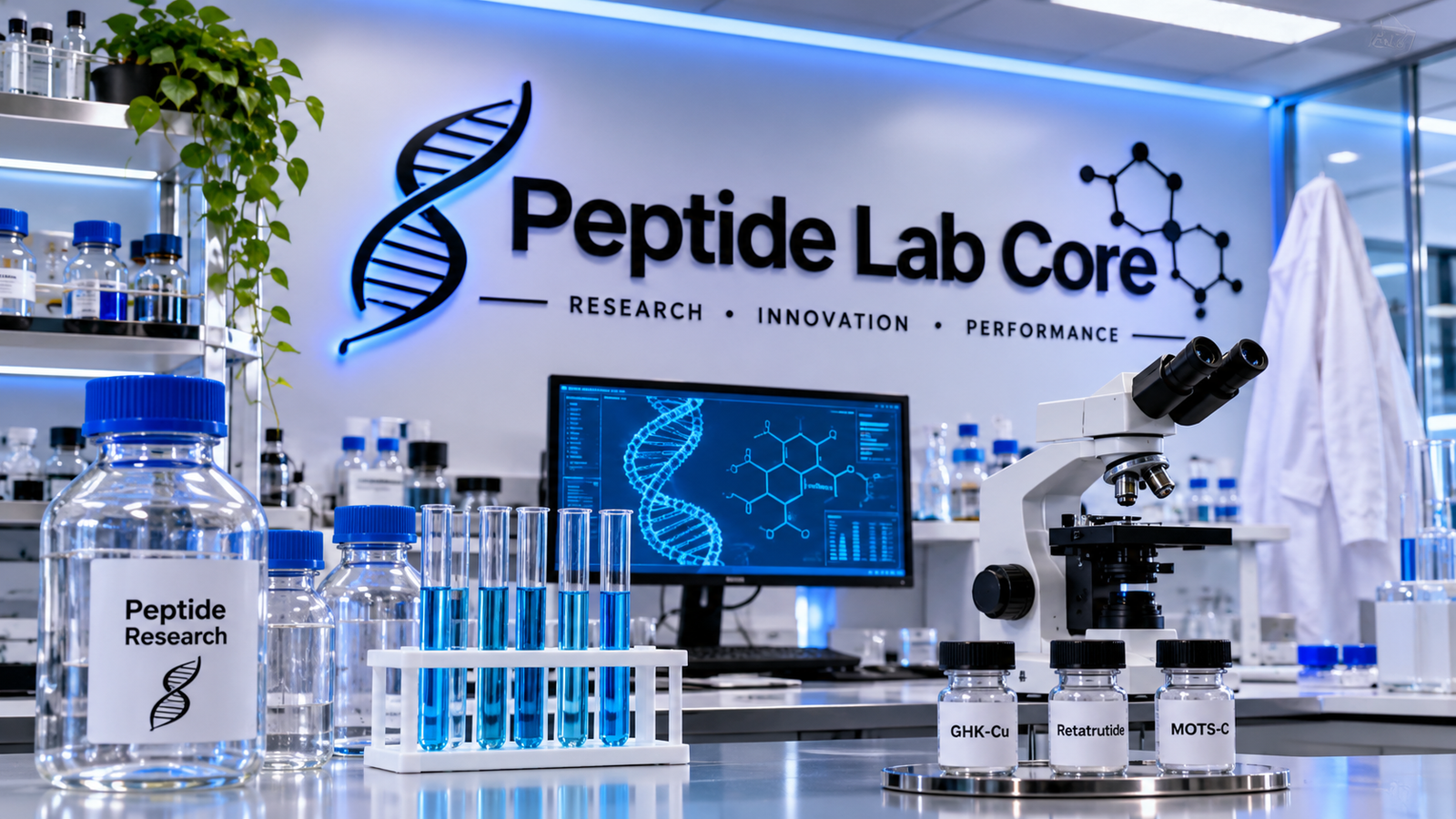
When researchers discuss P21 peptide benefits, they are usually referring to synthetic fragments derived from the p21/WAF1 protein, a key regulator of the cell cycle. These peptides are studied for their ability to mimic the natural protein’s function, particularly its capacity to inhibit cyclin-dependent kinases (CDKs) and induce cell cycle arrest. However, the naming in this space is deeply confusing. Before you source material, you need to understand which “P21” you are actually studying and what the published data actually shows.
What is the P21 Peptide and How Does It Work?
The P21 peptide is a synthetic fragment corresponding to specific regions of the p21/WAF1 protein. This protein is a major mediator of the p53-dependent growth-arrest pathway. Its primary function is to inhibit G1 cyclin-Cdk complexes, preventing the phosphorylation of the retinoblastoma protein (pRb) and blocking the cell cycle at the G1/S transition [citation:11].
Research has identified that small synthetic peptides based on the carboxy-terminal domain of p21 can bind to and inhibit cyclin D1-Cdk4. In a foundational 1997 study, a 20-amino-acid peptide inhibited Cdk4 activity with a concentration for half-maximal inhibition of 46 nM, and it was only four-fold less active than the full-length protein. When introduced into cells, both a 20-amino-acid and a truncated eight-amino-acid peptide blocked pRb phosphorylation and induced a potent G1/S growth arrest [citation:11]. This is the core mechanism behind the P21 peptide benefits being investigated in laboratory models.
Critical Naming Warning: You will encounter multiple unrelated compounds sold as “P21.” The research discussed here is the p21/WAF1-derived peptide. There is also a completely different “ras-p21” protein and its derived peptides studied in cancer research [citation:9][citation:14], as well as an unrelated cosmetic tetrapeptide (Tetrapeptide-21) that is sometimes abbreviated similarly [citation:4]. Always verify the sequence on the Certificate of Analysis.
The Proposed P21 Peptide Benefits in Research
The published literature on the p21/WAF1-derived peptide spans several distinct areas of preclinical investigation:
Cell Cycle Arrest
It is used as a tool to study the mechanisms of G1/S checkpoint control and the consequences of CDK inhibition in cell culture models [citation:11].
Cancer Research
Studies have explored whether p21-derived peptides can inhibit the growth of cancer cell lines, including ovarian and glioblastoma models [citation:1][citation:5].
Senolytic Activity
A 2026 European Research Council project (FibroPep) is investigating synthetic peptides that disrupt the p21-CDK4 interaction to selectively eliminate senescent cells in pulmonary fibrosis models [citation:2][citation:6].
Protein Interaction Mapping
It serves as a probe for studying the binding interfaces between p21 and its partners, such as CDKs and PCNA [citation:7].
The Critical Evidence Gap in P21 Peptide Research
This is where you must be extremely careful with your study design. The evidence for the P21 peptide benefits is entirely preclinical. There are no published human clinical trials for any p21/WAF1-derived peptide.
The most recent in vivo data comes from a 2026 study in glioblastoma cell lines, where a p21-derived peptide delivered via an elastin-like polypeptide carrier inhibited proliferation across three cell lines. However, the authors noted that apoptotic responses were generally low, and the effect was primarily cytostatic (stopping growth rather than killing cells) [citation:1]. The senolytic work for pulmonary fibrosis is still at the proof-of-concept stage, with the goal being to identify a lead peptide and test it in a preclinical mouse model [citation:2][citation:6]. For a deeper look at the published literature, you can review the NIH PubMed database.
⚠️ Sourcing and Quality Warnings
The P21 peptide is not approved by the FDA or any regulatory authority for human use. It is sold strictly as a research chemical. Because it is a short peptide, it is susceptible to degradation. A lot-specific Certificate of Analysis should include HPLC purity data and mass spectrometry confirmation to ensure the correct sequence and structural integrity.
What Separates Peptide Lab Core
We built Peptide Lab Core to address the ambiguity in the research market. When you source material from us, you receive documentation that verifies the contents of the vial.
Third-Party Testing
Every batch is independently verified for purity and identity.
Lot-Specific COAs
Certificates of Analysis are published against the exact lot number on your vial.
Verified Sequence
Mass spectrometry confirms the molecular weight matches the expected p21 fragment.
Domestic Fulfillment
Orders ship from US facilities, avoiding customs delays and ensuring fast delivery.
Advancing Your Research Safely
Understanding the P21 peptide benefits means acknowledging both its utility as a mechanistic tool for studying cell cycle control and the severe limitations of the current evidence. It is a fascinating compound for investigating CDK inhibition and senolytic pathways, but it is not a proven therapeutic. For researchers who need verified material with transparent documentation, Peptide Lab Core provides the analytical foundation your study requires.
