Blog
What is DAC in Peptides? CJC-1295 Half-Life Explained

What is DAC in Peptides? The Science of Half-Life
How the Drug Affinity Complex changes the way researchers study CJC-1295 and other GHRH analogs.
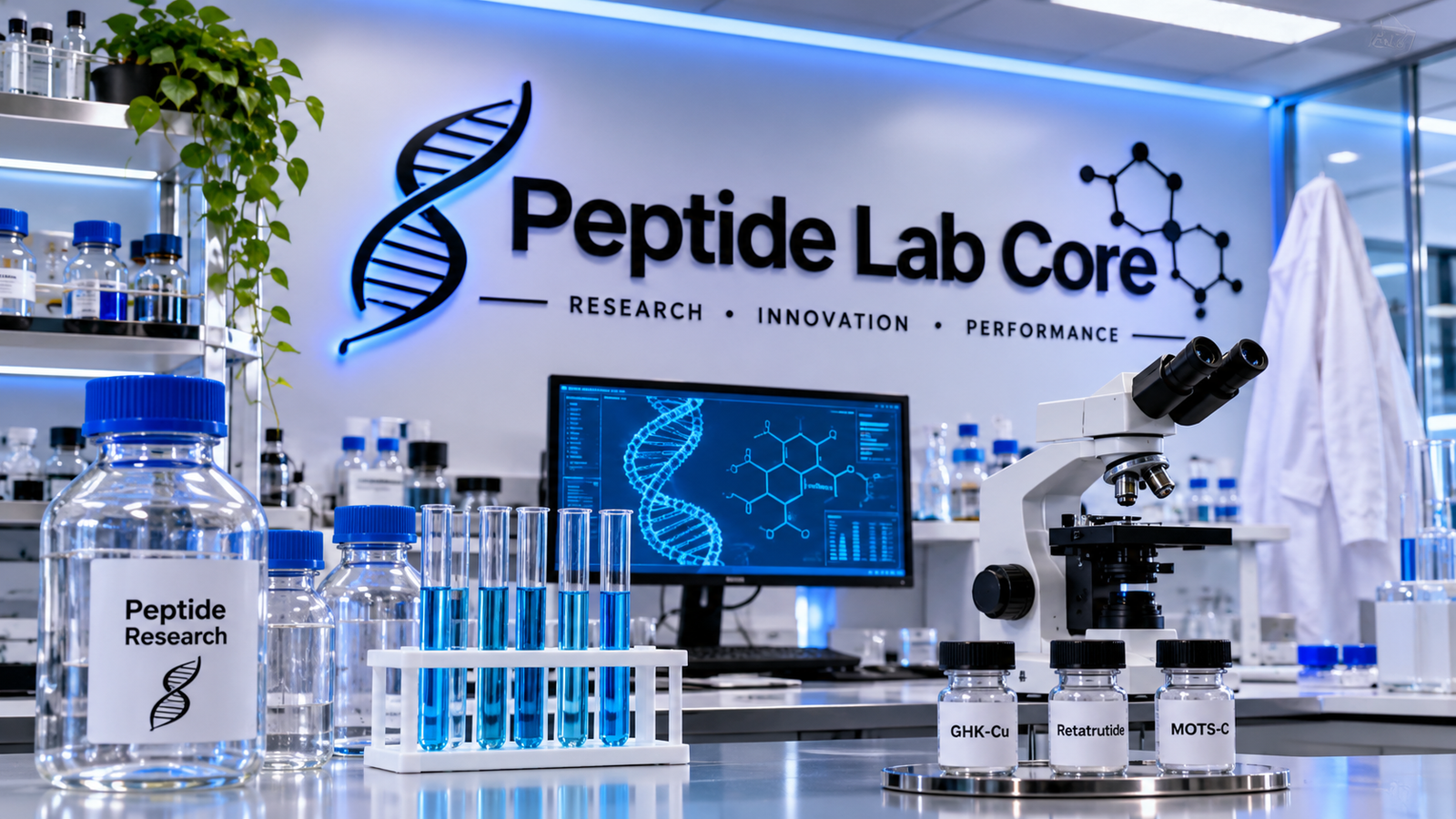
If you have spent any time researching growth hormone secretagogues, you have run into the term DAC in peptides. It is a small chemical modification that makes a massive difference in how a peptide behaves in a laboratory setting. If you are comparing CJC-1295 products, you need to understand what this modification actually does. Otherwise, you might design a study expecting a pulsatile signal and end up with a sustained bleed instead. Understanding DAC in peptides is critical for your experimental design.
What Does DAC in Peptides Actually Stand For?
DAC stands for Drug Affinity Complex. It is a chemical linker attached to the end of a peptide chain. Its purpose is simple but powerful: it acts as a molecular anchor .
When a peptide with DAC is introduced into a biological system, the linker reacts with serum albumin. Albumin is the most abundant protein in blood plasma, and it naturally circulates in the body for a long time. By covalently binding to albumin, the peptide essentially hitches a ride. This protects it from rapid breakdown by enzymes and prevents it from being cleared by the kidneys too quickly. This is the primary reason researchers look into DAC in peptides when they need extended activity .
The Chemistry: The DAC linker contains a maleimide group. This group is highly reactive toward free thiols, specifically the cysteine-34 residue on serum albumin. The result is a stable thioether bond that effectively turns a short-lived peptide into a long-acting one. Understanding this chemistry is key when studying DAC in peptides .
The Impact of DAC in Peptides Like CJC-1295
The most common place you see DAC in peptides is with CJC-1295, a synthetic analog of Growth Hormone-Releasing Hormone (GHRH). The difference between the two versions of this peptide is entirely about half-life .
CJC-1295 With DAC
The albumin anchor extends the half-life to roughly 6 to 8 days. A single dose has been shown to elevate GH for 6 or more days and IGF-1 for up to 28 days in clinical research .
CJC-1295 Without DAC
Also known as Mod GRF 1-29. Without the anchor, the half-life is only about 30 minutes. It produces a sharp, short pulse of GH that more closely mimics natural physiology .
If you are studying sustained receptor activation, the DAC version is your tool. If you are studying the natural pulsatile rhythm of growth hormone, the non-DAC version is the appropriate choice. They are not interchangeable in a well-designed protocol. Therefore, verifying the presence of DAC in peptides is a critical step before you begin.
Why Understanding DAC in Peptides Matters for Sourcing
Because the DAC modification changes the molecular weight of the peptide, it is a critical point of verification. The non-DAC version (CJC-1295 without DAC) has a molecular weight of approximately 3367.9 g/mol. The DAC version adds a lysine and a maleimidopropionyl group, bringing the mass to about 3647.2 g/mol .
If a Certificate of Analysis shows a mass that does not match the expected version, you have a problem. Mass spectrometry is the simplest way to confirm which version you actually have in the vial. When reviewing the documentation for DAC in peptides, the mass spec data is your most reliable proof. For a deeper understanding of analytical standards, you can review the NIH PubMed database.
⚠️ Do Not Assume
Many vendors use the term “CJC-1295” loosely without specifying whether it is the DAC or non-DAC version. If you are sourcing for a study where half-life is a controlled variable, always confirm with the supplier and check the mass spectrometry data on the COA. A mismatch regarding DAC in peptides will invalidate your experimental design.
What Separates Peptide Lab Core
We built Peptide Lab Core because we were tired of the ambiguity in the research peptide market. When you source material from us, you get lot-specific documentation that clearly identifies the compound you are studying, including whether it contains DAC in peptides.
Third-Party Testing
Every batch is independently verified for purity and identity.
Lot-Specific COAs
Certificates of Analysis are published against the exact lot number on your vial.
Verified Mass
Mass spectrometry confirms the molecular weight matches the specific version you ordered.
Domestic Fulfillment
Orders ship from US facilities, avoiding customs delays and ensuring fast delivery.
Advancing Your Research with Confidence
Understanding DAC in peptides is a small detail that makes a big difference in experimental design. Whether you need sustained exposure or a sharp pulse, knowing which version you are working with is the foundation of reproducible data. The presence or absence of DAC in peptides dictates the entire pharmacokinetic profile of your study.
If you are looking for high-purity research compounds with clear documentation, explore our catalog. We provide the testing and the supply chain integrity that your research deserves.
