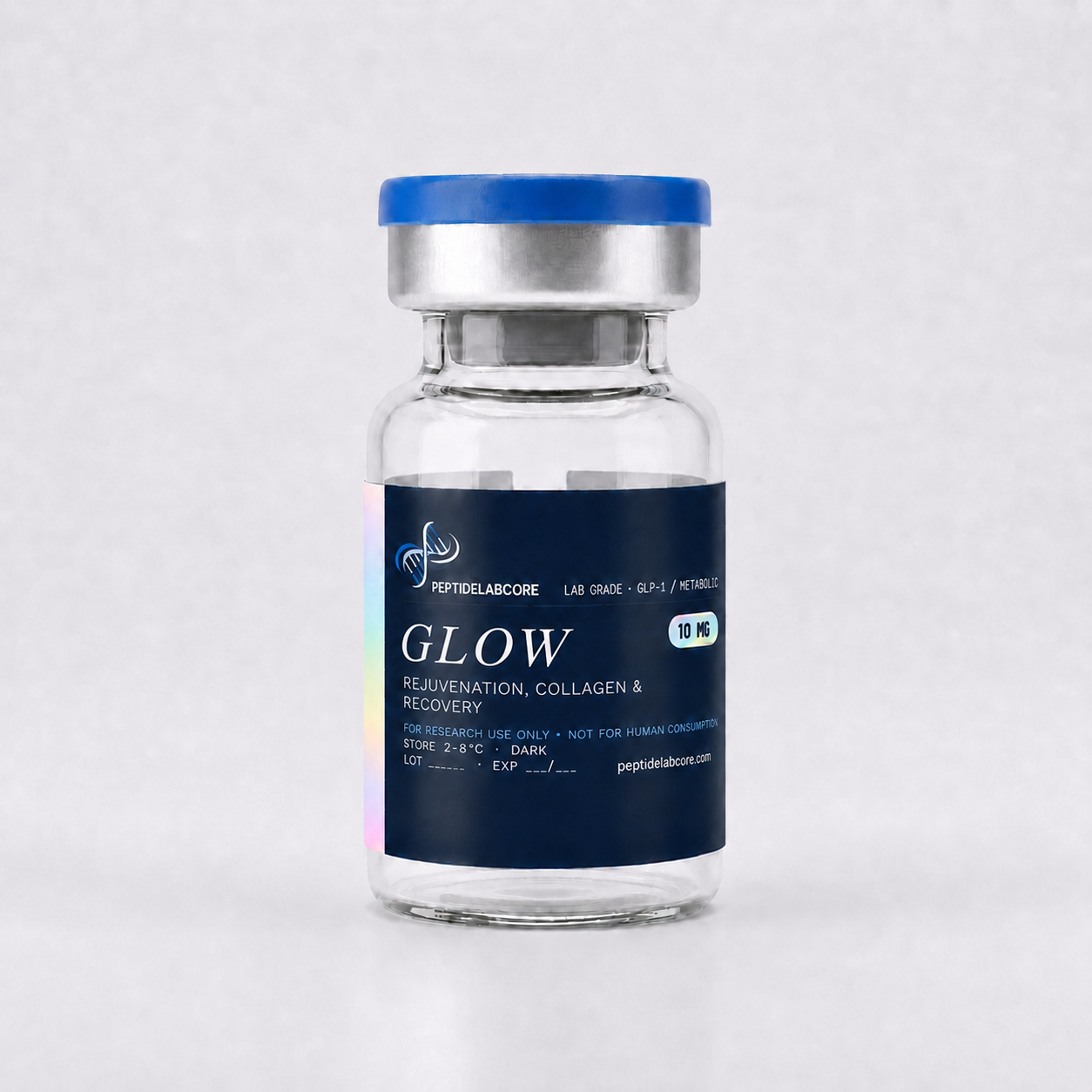
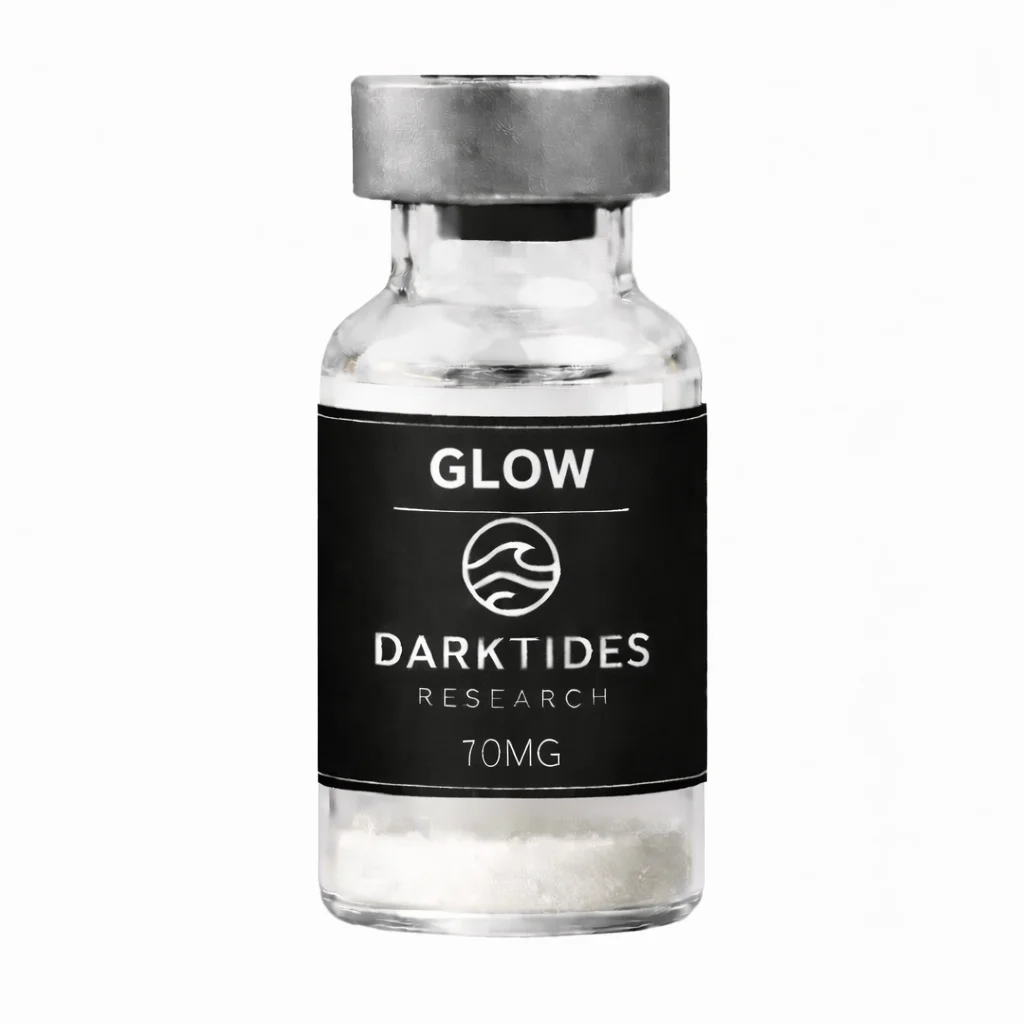
GLOW
$64.99
GLOW (50mg/10mg/10mg x 10) is a high-purity synergistic research peptide blend combining GHK-Cu, BPC-157, and TB-500. Supplied as a lyophilized powder in sterile vials, each batch undergoes independent third-party testing to verify identity and purity (>99%). This research chemical is intended exclusively for laboratory and in vitro experimentation. For research use only — not for human consumption.
GLOW Research Peptide Blend — Triple Synergistic Formulation for Laboratory Use
Product Overview
GLOW is a research-grade synergistic peptide blend combining three well-studied regenerative peptides in a single lyophilized formulation. It is supplied as a sterile lyophilized powder in sealed vials. Each package contains ten vials, with each vial containing a precise combination of GHK-Cu, BPC-157, and TB-500. This product is manufactured exclusively for scientific investigation and in vitro laboratory experimentation.
Key Specifications at a Glance:
Quantity: 10 vials per pack
Composition: GHK-Cu (50mg), BPC-157 (10mg), TB-500 (10mg)
Form: Lyophilized (freeze-dried) powder
Purity: >99% verified by third-party testing
Research Focus: Tissue repair, angiogenesis, cellular migration, collagen synthesis
Research Use Only: Not for human or animal consumption
Understanding GLOW: The Research Context
GLOW is a pre-formulated peptide stack designed for laboratory research into systemic tissue regeneration and repair mechanisms. Unlike single-peptide protocols that target isolated pathways, GLOW addresses multiple biological processes simultaneously, reflecting the understanding that tissue healing requires coordinated activity across inflammation resolution, angiogenesis, cellular migration, and structural remodeling.
The Three Components of GLOW:
| Component | Quantity per Vial | Primary Research Interest |
|---|---|---|
| GHK-Cu | 50mg | Collagen synthesis, gene expression modulation, extracellular matrix remodeling |
| BPC-157 | 10mg | Angiogenesis, nitric oxide signaling, tissue protection |
| TB-500 | 10mg | Cellular migration, actin remodeling, tissue organization |
The Systems Biology Principle Behind GLOW:
Tissues heal through coordinated parallel processes, not isolated steps. Inflammation resolution, angiogenesis, cellular repair, and remodeling occur simultaneously. Supporting only one of these processes creates imbalance and may delay recovery. GLOW was engineered to support three essential pillars of regeneration at the same time: repair signaling and angiogenesis, cellular migration and tissue remodeling, and structural rebuilding with long-term resilience.
Third-Party Testing and Quality Assurance
Every batch of GLOW undergoes rigorous independent analytical testing to verify identity, purity, and consistency. This third-party testing ensures that researchers receive a product that meets strict quality specifications before it is approved for release.
The testing process includes:
Identity verification through mass spectrometry
Purity analysis using high-performance liquid chromatography (HPLC)
Batch-to-batch consistency checks
Residual solvent analysis to confirm complete lyophilization
With verified purity exceeding 99%, GLOW meets the high standards required for serious laboratory research applications. Each vial contains only the lyophilized research compound combination with no unnecessary additives, fillers, or excipients.
Component Profiles: The Three Peptides
GHK-Cu (50mg) — The Copper Peptide for Structural Regeneration
GHK-Cu is a naturally occurring copper-binding tripeptide with the sequence Glycine-Histidine-Lysine. It has been extensively studied for its role in gene expression modulation and tissue remodeling.
Key Research Interests:
Collagen and elastin synthesis stimulation
Extracellular matrix (ECM) remodeling
Gene expression modulation (approximately 31% of human genes show ≥50% expression changes)
Antioxidant defense gene regulation
Angiogenesis support
GHK-Cu levels in human plasma decline with age, paralleling reductions in healing capacity and tissue quality. Within GLOW, GHK-Cu provides the structural reinforcement that converts short-term healing into long-term tissue resilience.
BPC-157 (10mg) — The Body Protection Compound for Repair Signaling
BPC-157 is a synthetic pentadecapeptide derived from a gastric protein. It has been studied for its cytoprotective and tissue-repair properties, particularly its ability to promote healing even in tissues with poor blood supply, such as tendons and ligaments.
Key Research Interests:
Angiogenesis promotion through VEGF activation
Nitric oxide signaling enhancement
Tendon and ligament repair acceleration
Gastrointestinal mucosal healing
Oxidative stress reduction
Within GLOW, BPC-157 functions as the repair initiator, restoring blood flow and creating the metabolic conditions necessary for regeneration.
TB-500 (10mg) — The Thymosin Beta-4 Fragment for Cellular Migration
TB-500 is a synthetic fragment of thymosin beta-4, corresponding to a key bioactive region. It has been studied for its role in actin binding, cell migration, and tissue organization.
Key Research Interests:
Actin sequestration and cytoskeletal dynamics
Endothelial cell migration and angiogenesis
Tissue remodeling and organization
Reduction of dysfunctional scarring
Acceleration of recovery from soft tissue trauma
Healing does not occur simply because cells are told to repair. Those cells must arrive at the correct location and organize appropriately. TB-500 ensures that the repair signals initiated by BPC-157 result in proper tissue architecture, not chaotic or fibrotic healing.
The Synergy: Why GLOW Works Differently Than Single Peptides
Single-peptide therapy often produces early improvement followed by plateau. This occurs because different biological processes become rate-limiting at different stages of healing. GLOW was designed to eliminate these limitations through coordinated multi-pathway targeting.
The Three Pillars of GLOW Synergy:
| Pillar | Primary Peptide | Function |
|---|---|---|
| Repair Signaling & Angiogenesis | BPC-157 | Restores blood supply and creates metabolic conditions for regeneration |
| Cellular Migration & Remodeling | TB-500 | Moves cells to injury sites and organizes tissue architecture |
| Structural Rebuilding & Resilience | GHK-Cu | Provides collagen synthesis and long-term tissue strength |
Why Single Peptide Therapy Plateaus:
Angiogenesis without remodeling fails — blood flow improves but cells may not organize correctly
Migration without structure is fragile — cells arrive but repaired tissue lacks strength
Structure without repair signals is slow — collagen increases but healing stalls due to inadequate blood flow
GLOW solves these problems simultaneously by addressing the entire regenerative network.
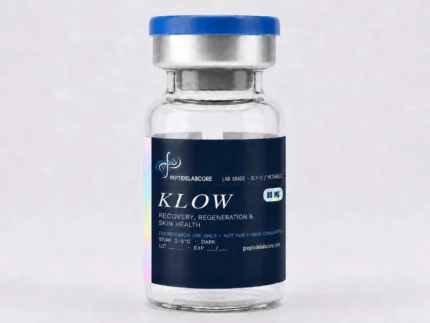
GLOW vs. KLOW: Understanding the Difference
Researchers often encounter both GLOW and KLOW formulations. Understanding the distinction is important for experimental design.
| Feature | GLOW | KLOW |
|---|---|---|
| Components | GHK-Cu, BPC-157, TB-500 | GHK-Cu, BPC-157, TB-500, KPV |
| Primary Research Focus | Tissue repair, angiogenesis, remodeling | Adds anti-inflammatory and mitochondrial support |
| KPV Inclusion | No | Yes (10mg) |
| Research Applications | Musculoskeletal repair, wound healing, skin regeneration | Broader systemic inflammation, gut health, oxidative stress |
KLOW extends the GLOW formulation by adding KPV, a tripeptide with potent anti-inflammatory properties and mitochondrial support functions. Researchers focused specifically on the triple-peptide synergy may prefer GLOW, while those investigating additional anti-inflammatory pathways may choose KLOW.
Chemical and Physical Properties
Molecular Characteristics of Each Component
| Component | Molecular Formula | Molecular Mass | Key Features |
|---|---|---|---|
| GHK-Cu | C₁₄H₂₃CuN₆O₄ | 401.91 g/mol | Copper-binding tripeptide; pale blue color |
| BPC-157 | C₆₂H₉₈N₁₆O₂₂ | 1419.5 g/mol | 15-amino acid linear peptide |
| TB-500 | C₂₁₂H₃₅₀N₅₆O₇₈S | 4963.55 g/mol | Thymosin beta-4 fragment |
Physical Form and Storage
The product is supplied as a lyophilized (freeze-dried) powder within a sterile, sealed vial. The blend typically appears as a homogeneous, off-white to pale blue substance due to the copper content of GHK-Cu.
Recommended Storage Conditions:
Store lyophilized powder at -20°C (-4°F) or below for long-term preservation
Protect from light exposure
Keep desiccated to prevent moisture absorption
Allow vial to reach room temperature before opening to avoid condensation
Avoid repeated freeze-thaw cycles once reconstituted
Stability and Reconstitution Notes:
Research has demonstrated that GHK-Cu remains stable at neutral pH for extended periods. BPC-157 is known to survive extreme acidic conditions (pH 1.5-3.5) as it was discovered in gastric fluid, making neutral conditions well within its stability profile. Under proper storage conditions (refrigerated, protected from light and agitation), blended peptide formulations remain stable and effective.
Once reconstituted with an appropriate sterile solvent, the solution should be used according to laboratory protocols, typically within 30 days when stored refrigerated.
Intended Use and Regulatory Status
Research Use Only
GLOW is classified as a research chemical and is intended exclusively for laboratory and in vitro experimentation. This designation means the product is sold strictly for:
In vitro testing — experiments conducted in controlled laboratory environments
Cell culture studies — investigating multi-peptide interactions with cellular systems
Tissue repair research — studying coordinated regenerative pathways
Angiogenesis studies — investigating blood vessel formation mechanisms
Analytical research — chemical analysis and characterization studies
Scientific investigation — basic research into peptide structure and function
Important Regulatory Notice
This product is not a drug, food, cosmetic, or medical device. Bodily introduction of any kind into humans or animals is strictly forbidden by law. The product should only be handled by licensed, qualified professionals working in appropriate laboratory facilities.
The supplier is a chemical supplier, not a compounding pharmacy or outsourcing facility under Sections 503A or 503B of the Federal Food, Drug, and Cosmetic Act. All product information provided is for educational purposes only and does not constitute medical advice or clinical recommendations.
Handling and Safety Guidelines
Professional Handling Required
GLOW should only be handled by trained laboratory personnel wearing appropriate personal protective equipment (PPE), including:
Laboratory coat
Nitrile gloves
Safety goggles or face shield
Appropriate respiratory protection if aerosolization is possible
Reconstitution Protocol
For laboratory use, the lyophilized powder should be reconstituted with a sterile, compatible solvent. Standard practice includes:
Allow the sealed vial to reach room temperature — approximately 15-30 minutes
Clean the rubber stopper with an alcohol swab
Add the calculated volume of sterile bacteriostatic water or appropriate solvent
Gently swirl or roll the vial between palms — do not shake vigorously to avoid foaming
Allow complete dissolution before use — this typically takes 5-10 minutes
Reconstitution Example for GLOW:
Using 3mL of bacteriostatic water provides a balanced formulation for research protocols. Always verify calculations based on specific experimental requirements.
Solvent Considerations:
Sterile bacteriostatic water (pH 5.5-7.0) is the recommended reconstitution vehicle. The benzyl alcohol in bacteriostatic water prevents bacterial growth during the typical 30-day research use window. Under refrigerated conditions with proper handling, the reconstituted blend maintains stability.
Disposal Considerations
Dispose of GLOW and any contaminated materials in accordance with federal, state, and local regulations for chemical waste disposal. Do not dispose of in regular trash or down drains unless permitted by local guidelines.
Research Applications
GLOW is used in various laboratory research contexts, enabling investigators to study multiple pathways simultaneously. Typical applications include:
Tissue Repair and Regeneration Studies:
Collagen deposition and extracellular matrix remodeling
Fibroblast migration and activation
Wound healing kinetics in controlled models
Angiogenesis and Vascular Research:
Endothelial cell migration and proliferation
Growth factor expression (VEGF, bFGF)
Capillary formation and vascular density
Musculoskeletal Injury Models:
Tendon and ligament repair mechanisms
Rotator cuff injury research
Chronic joint pain pathways
Connective tissue healing dynamics
Skin and Soft Tissue Research:
Dermal wound healing
Collagen and elastin synthesis
Skin thickness and elasticity studies
Post-procedural tissue recovery
Gastrointestinal Research:
Gut barrier integrity
Mucosal healing mechanisms
Inflammatory bowel disease models
Gastrointestinal repair pathways
Cell Culture Investigations:
Cellular responses to multi-peptide stimulation
Gene expression changes following treatment
Cell viability and proliferation under various conditions
Comparative mechanism research between single and combined peptides
Post-Surgical Recovery Models:
Surgical soft-tissue repair
Recovery time assessment
Scar formation and tissue organization
Researchers should design their experimental protocols based on peer-reviewed literature and established laboratory practices specific to multi-peptide formulations.
What Makes This Product Different
Pre-Formulated Synergistic Blend
Unlike individual research peptides that require separate handling, reconstitution, and storage, GLOW combines three complementary peptides into a single vial. This structured approach supports consistency, efficiency, and reproducibility in peptide-focused research settings.
Systems-Based Research Design
GLOW was engineered based on systems biology principles rather than isolated pathway targeting. By addressing angiogenesis, cellular migration, and structural remodeling simultaneously, GLOW allows researchers to study coordinated tissue regeneration rather than individual components in isolation.
Optimal Ratios for Research
The specific ratio of GHK-Cu (50mg), BPC-157 (10mg), and TB-500 (10mg) reflects the different effective concentration ranges of each peptide. GHK-Cu typically requires higher concentrations for gene expression effects, while BPC-157 and TB-500 are active at lower concentrations.
Rigorous Quality Control
Unlike research chemicals sold without verification, GLOW comes with documented third-party testing for every batch. This commitment to quality assurance gives researchers confidence in the consistency and reliability of their experimental results.
Complete Documentation
Each product listing includes full chemical specifications, including molecular formulas, molecular masses, and component quantities. This transparency allows researchers to verify the exact formulation they are working with.
Appropriate Packaging for Research Use
The sterile, sealed vial packaging protects the lyophilized powder from environmental contaminants. The 50/10/10 blend provides researchers with a standardized formulation for reproducible experimentation.
Batch Traceability
Each package of GLOW includes batch identification numbers that allow researchers to trace their material back to original manufacturing and testing records. This traceability is essential for reproducible research and quality documentation.
Frequently Asked Questions for Researchers
What is the purity level of GLOW?
Each batch is tested to verify purity exceeding 99%. Individual certificates of analysis are available upon request.
How should the lyophilized powder be stored?
Store at -20°C or below, protected from light and moisture. The lyophilized blend has a shelf life of approximately 24 months when stored properly.
What solvent should be used for reconstitution?
The standard protocol recommends sterile bacteriostatic water. Bacteriostatic water contains benzyl alcohol, which prevents bacterial growth during research use. Researchers should determine the appropriate solvent based on their specific experimental protocol.
Is this product sterile?
The lyophilized powder is manufactured under aseptic conditions. Researchers should follow standard laboratory practices for handling research chemicals. For cell culture applications, additional filtration using a 0.22-micron filter may be appropriate.
What is the significance of the pale blue color?
The pale blue tint of the lyophilized powder is characteristic of GHK-Cu, which contains copper and naturally appears blue to blue-green in color.
How does GLOW differ from KLOW?
GLOW contains three peptides (GHK-Cu, BPC-157, TB-500). KLOW contains those three plus KPV, adding anti-inflammatory and mitochondrial support to the formulation.
Is the blend stable when combined?
Yes. Research indicates that GHK-Cu is stable at neutral pH (the bond between copper and GHK is actually strengthened at neutral pH). BPC-157 was discovered in stomach acid and readily survives extreme acidic conditions. Under proper storage conditions (refrigerated, protected from light and agitation), the blend remains stable for research use.
What research applications is GLOW used for?
GLOW is studied in tissue regeneration research, wound healing models, angiogenesis studies, musculoskeletal repair, gastrointestinal healing, and skin regeneration research in laboratory cell cultures.
Can GLOW be used in combination with other research reagents?
Researchers should determine compatibility based on their specific experimental design. Standard laboratory practice includes testing interactions in control experiments before full-scale implementation.
Final Notes for Laboratory Researchers
GLOW represents a high-purity research tool for qualified professionals conducting legitimate scientific investigations into multi-pathway tissue regeneration, angiogenesis, cellular migration, collagen synthesis, and related regenerative medicine fields. With documented third-party testing, complete chemical specifications, and appropriate packaging for laboratory use, this product meets the standards expected by serious researchers.
The pre-formulated triple-peptide blend offers researchers the ability to study complementary mechanisms simultaneously, including copper-mediated extracellular matrix activation (GHK-Cu), cytoprotective signaling and angiogenesis (BPC-157), and actin-dependent cell motility and tissue organization (TB-500).
For research use only. Not for human or animal consumption. Handle only in appropriate laboratory facilities with proper safety equipment and training.
Related products
GHK-Cu 100MG
In Stock · Ready to Ship
Free Worldwide Shipping