Blog
GHK-Cu Peptide for Skin | Collagen & Repair Research

GHK-Cu Peptide for Skin: The Research Standard
Exploring the science behind collagen synthesis, tissue remodeling, and the regenerative properties of this copper tripeptide.
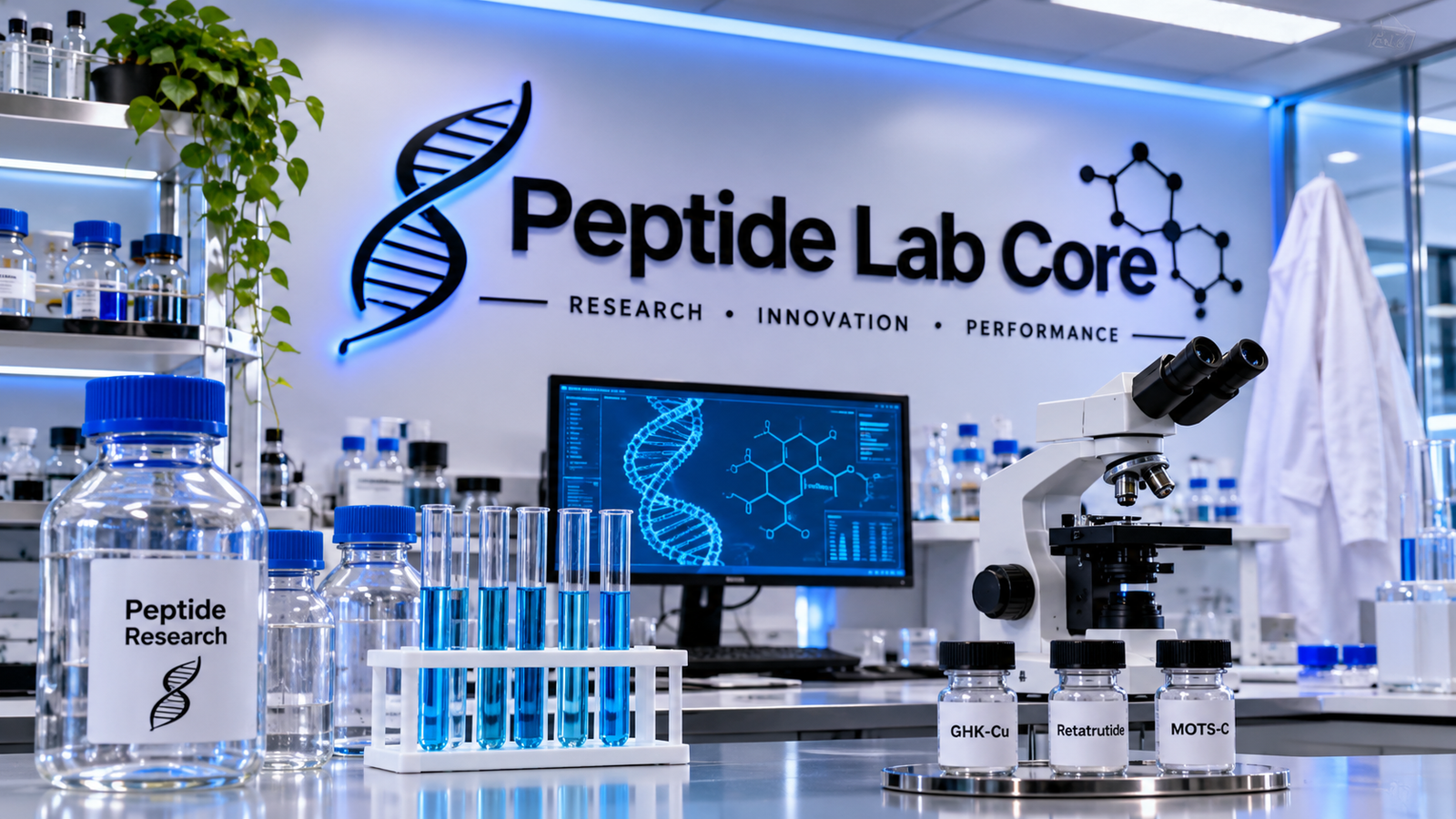
When you are looking into the GHK-Cu peptide for skin research, it is easy to get lost in the marketing hype. Every skincare brand claims to have the fountain of youth. But as a researcher, you care about the actual mechanisms. You care about what happens at the cellular level. The data on this naturally occurring copper tripeptide is genuinely fascinating, and it explains why it has become a cornerstone of dermatological and regenerative studies. Here is what the science actually shows.
Why Researchers Use GHK-Cu Peptide for Skin Models
GHK-Cu (glycyl-L-histidyl-L-lysine copper) is a small peptide with a high affinity for copper ions. It was first identified in human plasma, and research shows that our natural levels of it drop significantly as we age. This decline is closely linked to the loss of skin elasticity and slower wound healing that we see in older tissue.
The primary reason the GHK-Cu peptide for skin research is so prominent is its ability to act as a carrier. It delivers copper directly to cells, triggering a cascade of regenerative processes. It does not force a synthetic reaction. Instead, it acts as a biological signal that tells the body to start repairing and remodeling tissue.
Key Research Finding: A comprehensive review documented that GHK-Cu activates multiple tissue remodeling processes. It attracts repair cells to the site of damage, reduces inflammation, and increases the synthesis of collagen, elastin, and growth factors.
The Core Mechanisms in Skin Research
When you look at the published literature, the effects of the GHK-Cu peptide for skin fall into three distinct categories:
Collagen Synthesis
In vivo studies show GHK-Cu significantly increases collagen production. It stimulates collagen synthesis twice as much as noncollagen proteins, helping rebuild the extracellular matrix.
Anti-Inflammatory Action
Research shows it suppresses free radical production and reduces inflammatory mediators like TNF-α, helping to calm stressed tissue models.
Wound Healing
It stimulates angiogenesis (new blood vessel formation) and promotes the proliferation of fibroblasts and keratinocytes, accelerating tissue repair.
Why Purity is Critical for Your Assays
Because the GHK-Cu peptide for skin research relies so heavily on its interaction with copper, the purity and stoichiometry of the compound are critical. A batch with incorrect copper loading or degraded peptide chains will not behave as expected in your assays.
The research peptide market is largely unregulated. If you are going to spend your time running experiments, you need to make sure your starting material is legitimate. A proper Certificate of Analysis (COA) should include the lot number matching the vial label, purity by RP-HPLC (stated above 99%), and identity confirmation by mass spectrometry. For a deeper understanding of analytical standards, you can review the NIH PubMed database.
⚠️ The Sourcing Trap
Do not buy GHK-Cu based on a pretty website. If the vendor cannot provide a lot-specific COA with mass spectrometry data, walk away. The difference between a pure, active peptide and a degraded one is the difference between reproducible research and wasted time.
What Separates Peptide Lab Core
We built Peptide Lab Core because we were tired of the guessing game. When you source research-grade material from us, you are getting exactly what the label says.
Third-Party HPLC Testing
Every batch is independently verified for purity and identity.
Lot-Specific COAs
Certificates of Analysis are published against the exact lot number on your vial.
Verified Copper Complex
Mass spectrometry confirms the GHK-Cu complex and correct copper loading.
Domestic Fulfillment
Orders ship from US facilities, avoiding customs delays and ensuring fast delivery.
Sourcing the Best GHK-Cu for Your Lab
The research into the GHK-Cu peptide for skin is only getting deeper. From dermatology to emerging studies in tissue regeneration, the biological reach of this tripeptide continues to expand. If your lab is ready to investigate these pathways, you deserve a supplier who respects your work as much as you do.
When you source research-grade GHK-Cu from Peptide Lab Core, you are purchasing the documentation, the testing, and the supply chain integrity that make your research reproducible. Browse our catalog to see the difference for yourself.
Ready to Source GHK-Cu?
Browse our catalog of HPLC-verified, third-party tested GHK-Cu with lot-specific COAs.
Shop GHK-Cu Peptide →